Reducing Pilferage and Improving Route Compliance: Implementing AI -RTM Stack in Africa
Shows how AI-powered RTM stacks help African FMCG brands curb losses, enforce compliance, and improve distributor accountability.

Africa has often made headlines for its rising FMCG and CPG market potential. From small kiosks in rural towns and corner shops run by families, to bustling street vendors and modern supermarkets in cities, the retail network is growing stronger every year. This growth means more opportunities for brands to reach consumers.
But behind this progress, there is a silent challenge – pilferage and stock theft. Goods often disappear at different points in the chain: in warehouses, during transportion, or even at the store. On the top of that, missed routes and skipped outlets make things more worse. These losses may look small at first but can add up to millions annually.
For operating in Africa’s market, the real question is not how to sell more, but also how to protect every product on its journey.
Some leading companies have started addressing this by introducing AI visibility at every stage of the journey, making it harder for theft and route deviations to go unnoticed
I. The Reality of Pilferage and Route Deviations

The biggest losses often don’t come from competitors on the shelf, but from the invisible cracks within the supply chain itself. Pilferage, shrinkage, and missed routes are like slow leaks in a water tank. You may not notice them immediately, but over time they drain away future growth, profits, and trust.
The cost of theft and loss
Pilferage can look small on paper – maybe one or two packages of milk going missing, or a handful of lost biscuits on the way not accounted for. But when this repeats every day, the annual loss becomes huge.
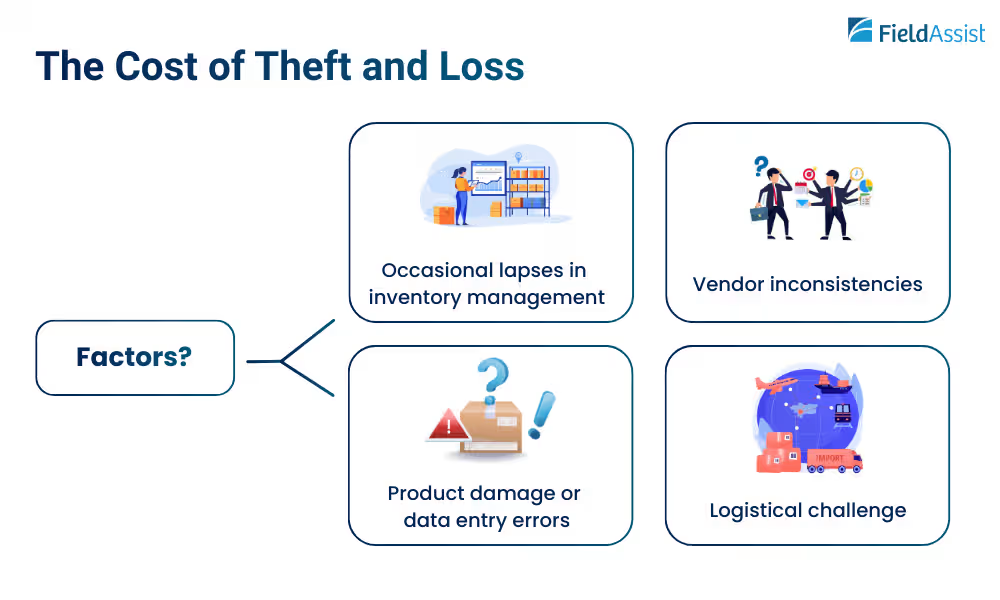
Research from scielo.org.za highlights that stock discrepancies in both shelves and warehouses can arise from various factors within the supply chain, such as:
- Occasional lapses in inventory management by drivers, loaders, or warehouse staff.
- Vendor inconsistencies, such as overstating returns or discrepancies in invoices.
- Product damage or data entry errors, such as minor handling issues or manual oversights in the billing process.
- Logistical challenges, may include risks of goods being lost or delayed during transit, particularly on higher-risk routes.
Compliance Lapses in Distribution
Most compliance lapses in distribution happen not in the factory, but in the flow, between orders raised, invoices printed, and vans dispatched across hundreds of routes. When these touchpoints rely on manual processes, the risk multiplies.
Here’s how compliance lapses actually happen in real-world FMCG distribution across Africa

1. Wrong quantities & Fake Invoices
A regional distributor in Kenya orders 500 chips, but only 480 arrive. The supplier issues an invoice for 500. Since the transaction was manually recorded, the 20 missing chips are never flagged and are quietly sold outside. Since no proper checking was recorded between the order, billing, and the delivery note, this created a gap in inventory accuracy and financial reconciliation
2. Fewer or Damaged Goods Arriving at Warehouse
This usually happens when trucks bring fewer goods or damaged cartons, but no one counts properly. Let’s say a driver delivers 200 bags of rice instead of 210. Since no one recounts, the missing 10 bags go unnoticed. This happens when there’s no barcode scanning or proof of unloading.
Another example could be when a delivery of 30 oil cartons includes 5 damaged ones, but without proper inspection at unloading, the issue goes unreported – causing inventory loss and delays later.
3. Items Removed or Swapped During Picking
This happens when a picker removes items while packing orders or replaces them with lower-value ones. This lapse usually occurs when orders are picked manually without barcode scanning or supervisor validation. So if a retailer ordered 50 premium soaps, but the picker packs only 40 premium and 10 regular soaps, it results in a loss of product value, wrong billing, and mistrust between the distributor and retailer. Over time, such swaps not only reduce profits but also damage brand credibility in the market.
4. Extra/ Undocumented Items Added or Removed at Loading
At a busy loading bay in Accra, the warehouse team rushes to dispatch multiple trucks. During the chaos, 5 extra cartons of detergent are loaded but not listed on the dispatch note. These cartons later vanish in transit. This happened because of the paper-based loading process, weak supervision, and no digital match between manifest and loaded stock allows unverified additions or removals.
5. Route Deviations & Midway Offloads During Transit
While delivering goods across Zambia, a truck makes an unplanned stop at a roadside shop to unload a few cartons for quick cash. The delivery report still shows “on time” arrival because there’s no live tracking. Why does it happen? No GPS route adherence, lack of driver monitoring, and absence of automated journey logs.
6. Fake or Reused Returns in Reverse Logistics
A distributor reports 100 cartons of “expired” snacks for return and receives credit. Later, the same cartons reappear in the local market with fresh labels. This happened because there was no return verification or quarantine process; returned items are not scanned or tracked by batch.
II. What New-Age Technologies Can be Used to Win Africa’s FMCG market?
For years, pilferage, route deviations, and lapses in supply chain compliance were often seen as unavoidable costs of doing business. However, many brands that leveraged modern solutions were able to minimize losses. What they did differently was to leverage modern technology for top-to-bottom surveillance, bringing together tracking and monitoring of every aspect of the supply chain into a single flow. Some new-age technologies enabling brands to make significant impact in Africa’s FMCG and CPG markets are:
1. Sales Tracking App
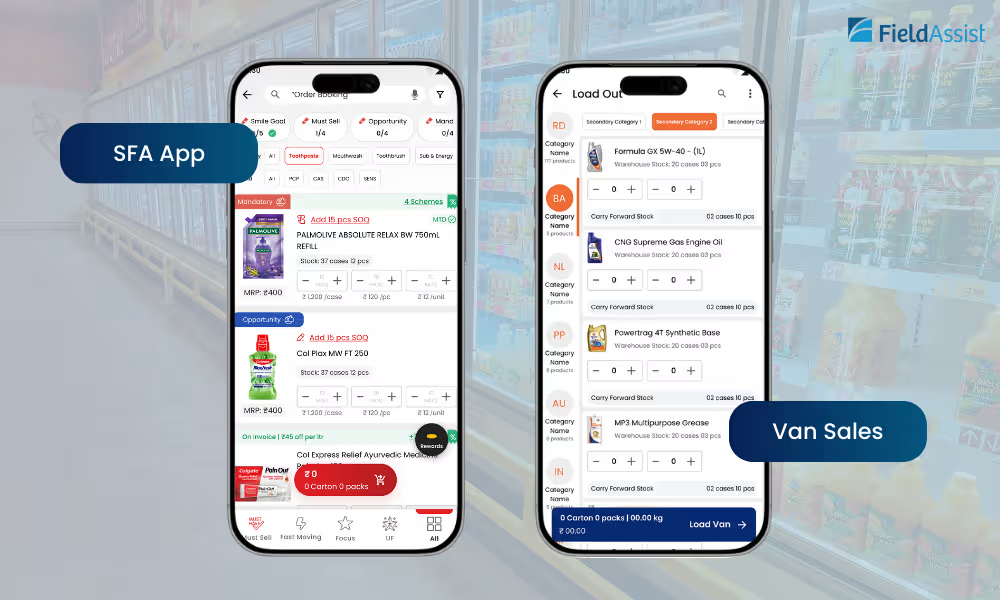
Instead of relying on paper orders, many brands are empowering their sales teams to use a dedicated mobile SFA app to record orders, check inventory, and capture payments on the spot – even offline.
Example: A dairy brand in Uganda equips its field sales agents with an SFA app that allows them to push orders directly to the central system in real-time. This ensures every order is mapped to a valid invoice, reducing ghost or phantom sales.
What difference does sales tracking deliver?
- Provides a full audit trail of every sale.
- Minimizes data entry errors.
- Gives management visibility into daily sales performance.
2. Van Sales Automation
For markets served via vans (especially in semi-urban or rural zones), the van sales tracking monitors what the van carries, how much load, where it goes, and where it sells. This gives you the extra surveillance on ready stock distribution.
Example: In East Africa, a CPG brand replaced pen-and-paper van routes with digital van sales and GPS tracking, and witnessed pilferage drop by 20–30% within quarters. The van app tracks the van’s inventory, matches each delivered order to the vehicle manifest, and requires the driver to record sales and payments in real time.
What difference does van sales deliver?
- Ensures route adherence
- Complete visibility in sales
- Complete Route Mapping
3. Asset Tracking for MT & GT
Beyond vehicles and stock, brands depend on “non-moving” but valuable assets that are often misplaced, stolen, or misused, such as a fridge, cooler, or display shelf. FieldAssist helps brands digitally record, assign, and track these assets via image recognition, so one can keep track of the current status of the assets.
Example: A beverage company in Ghana offers promotional refrigerators, coolers to its loyalty retailers. To prevent misuse of the product or asset loss, they had Image recognition tracking within their system and gained complete visibility.
What difference does asset tracking deliver?
- Prevents loss of high-capital assets
- Ensures ROI on promotional investments
- Reduces the cost of replacing missing items.
4. Fleet Tracking
Fleet tracking brings visibility to ground operations by showing where delivery vehicles are, what they carry, and how they perform. When linked with FA SFA, brands can see both movement and material flow in one view.
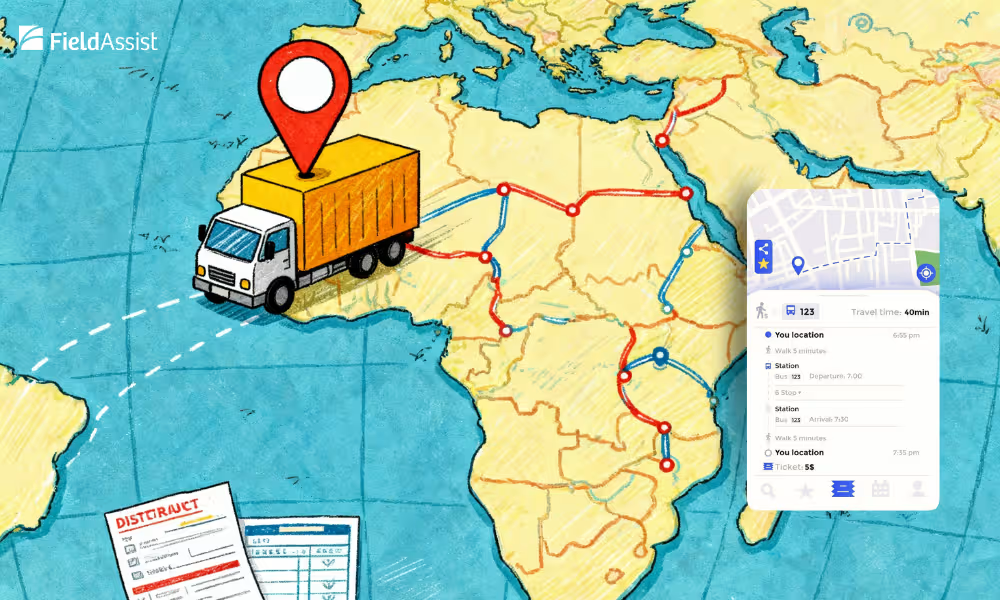
Example: A personal care brand operating in Zambia integrated its FA SFA with GPS tracking. Managers could see if trucks followed the planned delivery route and completed all invoices. Thus, unauthorized stops were reduced, and delivery compliance rose sharply.
What difference does fleet tracking deliver?
- Helps detect route deviations, idle time, or off-route activities
- Ensures dispatches reach outlets as planned.
III. Practical Steps to Implementation: How to Align Tech with Your Team’s Needs?
Market success in Africa depends on how well the tools and technologies are integrated into existing business processes and how people on the ground adapt to them. African companies can follow these practical steps to ensure smoother implementation:
1. Train teams for adoption
- Hands-on training for drivers and field staff builds comfort with new tools, reducing resistance to change.
- Simple mobile interfaces make it easy for even semi-skilled staff to use without slowing down operations.
- Regular refresher sessions keep adoption consistent and ensure compliance doesn’t fade over time.
2. Integrate technology with current workflows
- Linking AI-RTM with existing DMS/ERP systems ensures managers see one unified view of sales, deliveries, and stock movement.
- Automated data capture reduces manual paperwork, lowering errors and freeing staff to focus on execution.
- Seamless compatibility with handheld or mobile devices helps teams track and update information in real time.
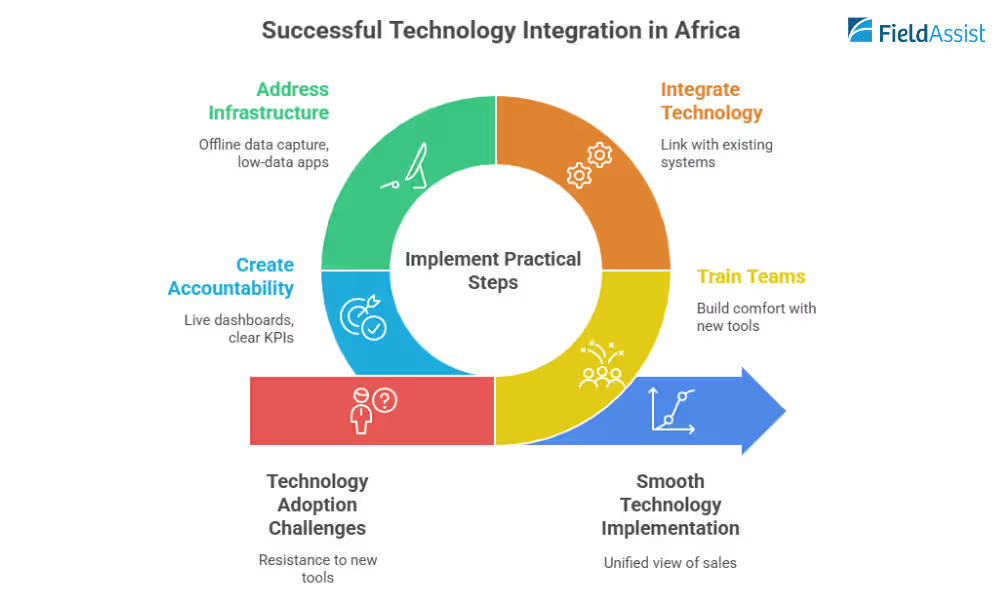
3. Address infrastructural barriers
- Offline data capture via the SFA and DMS app ensures work continues even in rural areas with weak network coverage, syncing automatically when connectivity returns.
- Low-data applications minimize internet usage, reducing operational costs for teams in remote locations.
- Battery-efficient devices help drivers and reps work full shifts without power challenges.
4. Create a culture of accountability
- Live dashboards for managers give visibility into driver performance, route compliance, and delivery outcomes.
- Clear KPIs such as “on-time deliveries” or “pilferage reduction” align everyone toward measurable goals.
- Recognition and rewards for compliant behavior motivate staff and reduce resistance to monitoring.
Conclusion
In every market, distribution is the invisible backbone of growth. But in Africa, it carries an even deeper weight. Roads stretch into rural towns, fleets cross high-risk corridors, and retailers rely on timely replenishment to stay competitive. Pilferage and route deviations are not just operational leaks – they are barriers that hold back profitability, efficiency, and long-term market trust.
So the answer to the question – How do we secure every delivery? How do we build compliance in real time? How do we ensure that every product reaches the right outlet at the right time? – does not lie in short-term fixes. It lies in an RTM partner who understands the unique rhythm of Africa. Because when technology is combined with local understanding, what once looked like an unavoidable cost becomes a measurable competitive advantage.
At FieldAssist, we have seen how African brands, by choosing the right RTM partner, have moved beyond survival to leadership – and can show you the blueprint for reducing losses, scaling operations, and unlocking Africa’s next wave of growth.